Rooftop Solar Subsidy Schemes and Their Impact on Renewable Energy Adoption
What happened
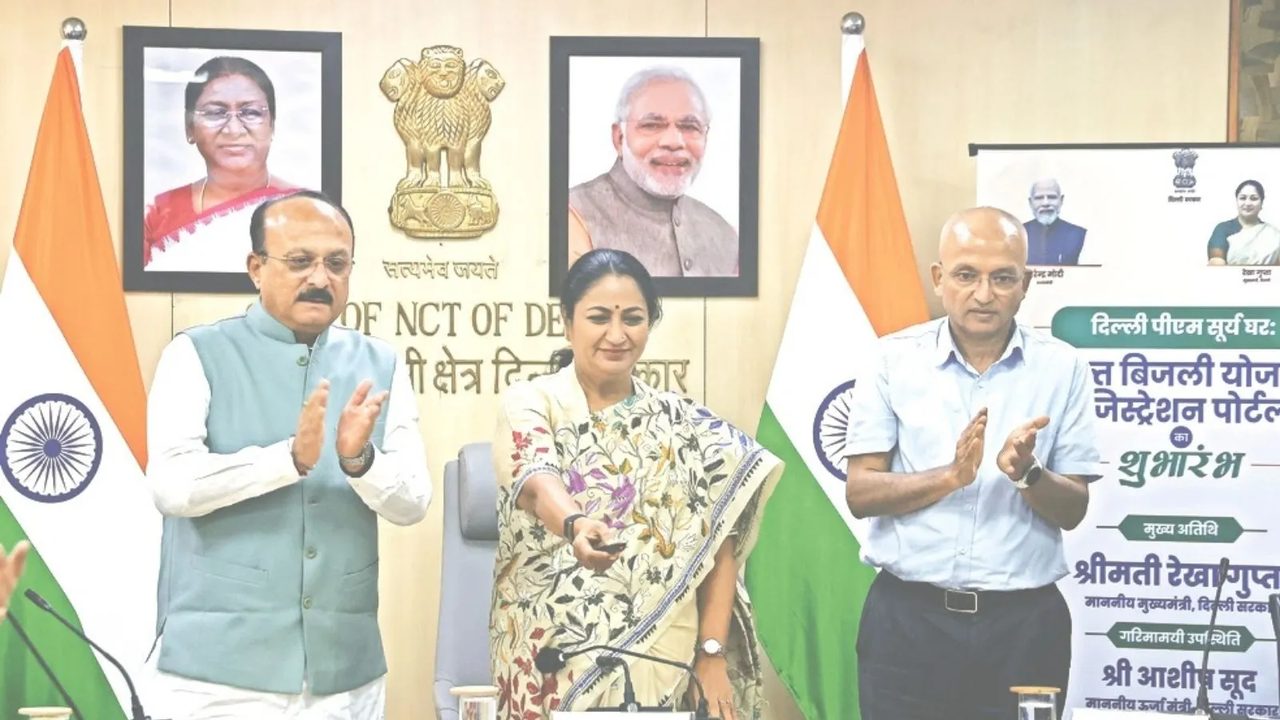
The Delhi government announced plans to provide free rooftop solar systems to over 2.3 lakh families as part of the 'Pradhan Mantri Surya Ghar: Muft Bijli Yojana'. Chief Minister Rekha Gupta launched a registration portal for this initiative, which aims to incentivize solar energy adoption among domestic consumers with an average monthly electricity consumption of up to 400 units. The scheme includes a total subsidy of up to Rs 1.56 lakh, combining both central and state support.
Key takeaways
- Rooftop solar schemes aim to increase renewable energy adoption — This reflects the government's commitment to sustainable energy and reducing reliance on fossil fuels.
- Subsidies play a crucial role in making solar installations affordable — Financial incentives can significantly lower the initial cost barrier for consumers, encouraging wider adoption.
- Challenges such as free electricity and high upfront costs hinder solar adoption — Understanding these barriers is essential for formulating effective policies that promote renewable energy.
- The initiative targets low-consumption households, maximizing impact — By focusing on families with lower electricity usage, the scheme aims to benefit economically weaker sections and enhance energy access.
- The scheme is part of a broader national strategy to promote solar energy — This aligns with India's commitments to renewable energy targets and climate change mitigation.
Conceptual analysis
The Delhi government's initiative to provide free rooftop solar panels to over 2.3 lakh families is a significant step towards promoting renewable energy and addressing the challenges of energy access in urban areas. The scheme, part of the 'Pradhan Mantri Surya Ghar: Muft Bijli Yojana', aims to incentivize households with lower electricity consumption to transition to solar power. By offering substantial subsidies of up to Rs 1.56 lakh, the government addresses the financial barriers that often deter consumers from installing solar systems. This initiative is particularly relevant in a city like Delhi, where traditional solar adoption has been slow due to factors such as free electricity for low consumption and the high upfront costs associated with solar installations. The scheme not only aims to increase the number of solar connections but also seeks to create awareness and encourage a shift towards sustainable energy practices. As India strives to meet its renewable energy targets, such state-level initiatives play a crucial role in fostering a culture of sustainability and energy independence.
Concept explainers
Solar panels installed on the roofs of buildings to convert sunlight into electricity.
Financial assistance provided by the government to reduce the cost of a product or service.
A government scheme aimed at promoting solar energy usage among households.
The ability of individuals and communities to obtain affordable, reliable, and sustainable energy.
Syllabus tags
Source: Indian Express, 22 Sep 2026
Read today's current affairs
Sign up free for daily UPSC concept cards, Prelims practice, and Mains evaluation.