Development of High-Speed Corridors and National Highway Infrastructure
What happened
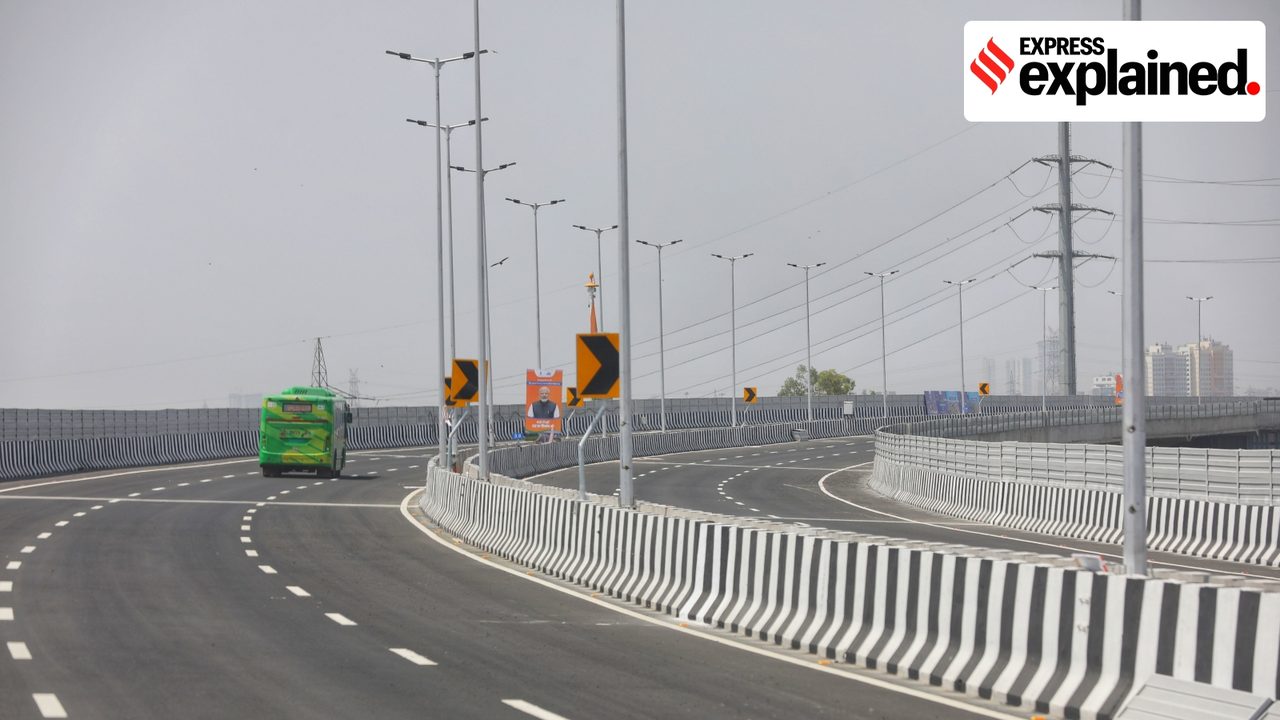
The National Highways Authority of India (NHAI) released comprehensive guidelines on 21 September 2026 for the planning and design of high-speed access-controlled national highways, aiming to establish uniform standards and enhance road safety. This initiative is part of India's broader Vision 2047, which targets the construction of 50,000 km of high-speed corridors by 2036-37, with the current total at 3,052 km as of December 2025.
Key takeaways
- High-speed corridors are designed for uninterrupted travel — [They facilitate efficient long-distance transportation, crucial for economic growth and logistics.]
- NHAI's new guidelines standardize design and safety measures for national highways — [This uniformity aims to enhance safety and operational efficiency across the highway network.]
- Traffic assessment for these corridors includes various factors like existing and induced traffic — [Such comprehensive analysis ensures that the highways are built to meet real-time demands and usage patterns.]
- The initiative aligns with the Government's Vision 2047 for a developed India — [It reflects a strategic approach to infrastructure development, essential for boosting connectivity and economic development.]
- The total length of high-speed corridors is projected to reach 50,000 km by 2037 — [This ambitious target underscores the government's commitment to modernizing transportation infrastructure.]
Conceptual analysis
The development of high-speed corridors in India represents a significant advancement in the country's infrastructure strategy, particularly under the framework of Vision 2047. The National Highways Authority of India (NHAI) has introduced comprehensive guidelines aimed at standardizing the design and construction of access-controlled national highways. These guidelines address the need for uniformity in the preparation of Detailed Project Reports (DPRs) and emphasize safety measures tailored to high-speed traffic conditions. The initiative is critical as India aims to expand its high-speed corridor network to 50,000 km by 2037, enhancing connectivity and reducing logistics costs. The guidelines mandate thorough traffic assessments, ensuring that the highways are designed to accommodate current and projected traffic flows. This strategic focus on infrastructure not only aims to improve operational efficiency but also aligns with broader economic goals, positioning India as a competitive player in the global logistics and transportation landscape. As the country progresses towards its ambitious targets, the establishment of these corridors is expected to play a pivotal role in facilitating economic growth and improving the overall quality of transportation infrastructure.
Concept explainers
Highways designed to limit access points to improve traffic flow and safety.
Comprehensive documents that outline the planning, design, and execution of infrastructure projects.
A measure used to assess the impact of vehicle loads on road infrastructure.
A unit used to quantify traffic flow, representing the equivalent of one passenger car.
Syllabus tags
Source: Indian Express + PIB, 22 Sep 2026
Read today's current affairs
Sign up free for daily UPSC concept cards, Prelims practice, and Mains evaluation.